A Lament
Kathryn A. Newman
In the Irish tradition, the caoine-adh— or keen — was a lament sung for fallen warriors, dissolved war bands, and the passing of heroic ages. It mourned not just individual loss but the breaking of bonds that made men more than themselves: the brotherhood of those who fought as one, moved as one, and could never be whole again once scattered. The keen gave voice to a particular grief — not death alone, but the end of a collective identity, the dissolution of a unity that transformed ordinary men into something greater.
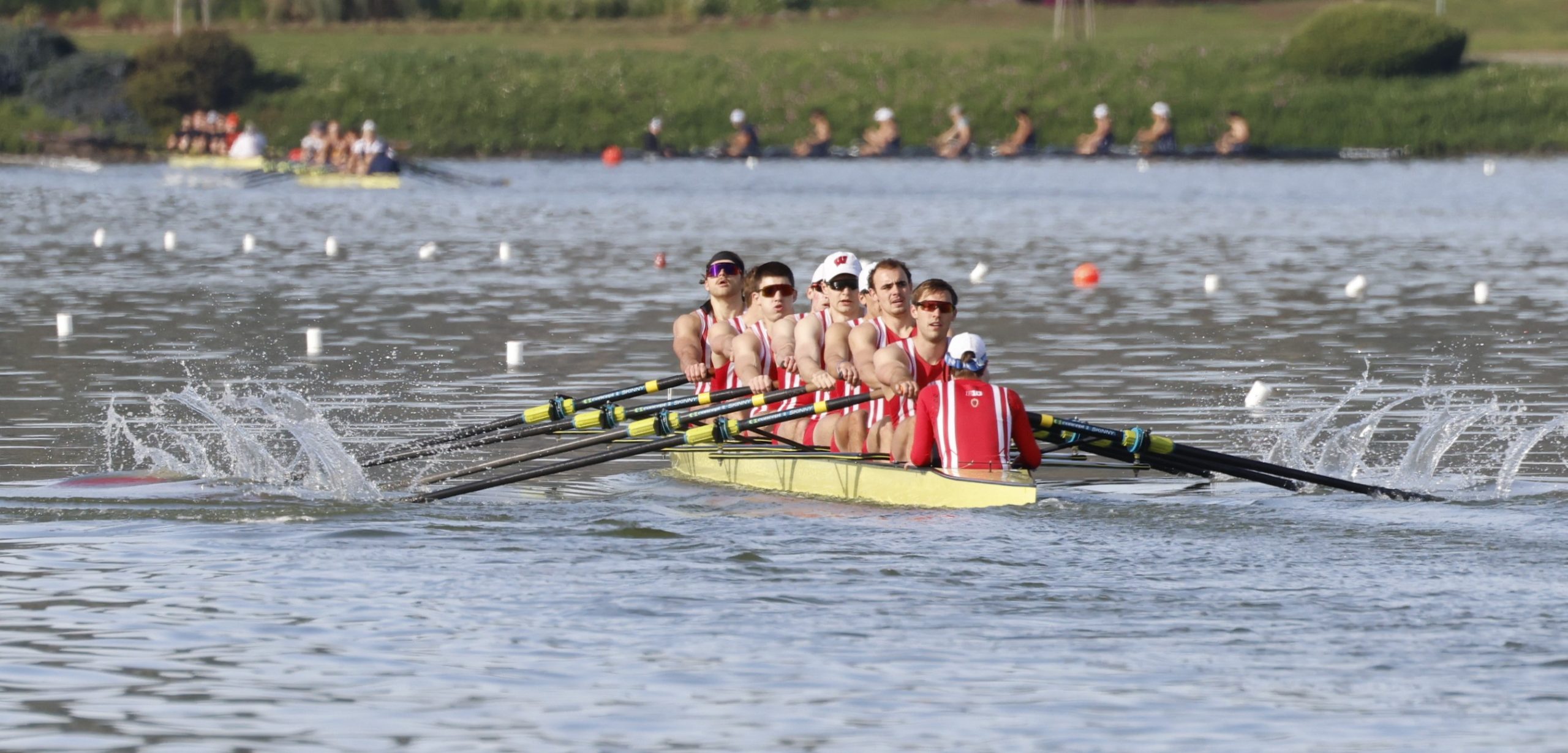
This is a lament for the men who rowed eights at the University of Wisconsin-Madison from 1972 through 1975 — a dynasty that established itself as the dominant force in collegiate rowing. The Badgers claimed the Ten Eyck Trophy four consecutive years, proving they had the deepest program in the nation. From 1973 to 1975, they won three straight Varsity Eight National Championships, possessing the fastest boat in America. In 1973, they achieved the rarest feat in the sport: sweeping all three races — Varsity, Junior Varsity, and Freshman Eights — at the IRA National Championship.
Freshmen, junior varsity, and varsity crews cycled through lineups, seasons, and boats, yet they shared something essential: a self-driven culture that pushed beyond what coaches demanded, a collective pursuit of perfection on water. They built a dynasty not as one eight, but as a program that knew what it meant to move as one.
This lament speaks in the voice of one rower, remembering his eight. But it mourns what all of them lost: the scattering, the dissolution, the end of that era when they belonged to something greater than themselves. The perfection they can never reclaim.
************
Hear this, you who know the pull,
you who have tasted brotherhood on water—
I tell you what we were
before we were scattered.
Once we moved as one.
Not by word.
Not by command.
We faced backward.
Always backward.
The water went where it would.
We did not see it.
One voice saw for us,
one voice held the line.
It counted the breath of the water.
We trusted it.
We had no other choice.
We did not begin in harmony.
The boat was still.
The water held us.
The first strokes were short
And light.
Legs drove
before the rest would follow.
The water slow to yield.
We struck again.
And again.
The strokes lengthened.
The weight began to move.
What would not go
was forced to go.
Breath broke loose.
The boat answered.
Only then
could the rhythm begin.
One man held the time.
He did not hurry it.
He did not ease it.
His blade entered.
His blade left.
We matched what we could see.
What we could not see
came right
because he was steady.
He did not pull for himself.
He pulled
so the rest of us
would arrive together.
The man before me moved.
I moved, as did we all.
There was no following.
Only the beginning
passing through us.
Once the blade entered clean.
Once the blade left clean.
Eight marks lay on the water—
I remember them
as they did not last.
I could not name my strength.
I only knew the weight of the pull
when it passed through me
unchanged.
My legs knew the order.
They drove without asking.
My back followed.
My arms finished
what had begun
before thought
could claim it.
The body remembered
what the mind could not hold.
Breath found breath.
Knees rose together.
Eight men breathed one breath
because there was only one rhythm
and it did not belong
to any of us.
A mistake nearly came.
A blade caught wrong.
Hands answered
before fear arrived.
The water forgave us
because we were together still.
I did not look aside.
There was nothing there.
Only the blade ahead of me,
bright at the edge of sight,
rising and vanishing,
told me my time.
What I pulled alone was nothing.
What we pulled together
carried us forward.
There was a moment—
I cannot name it—
when the timing held,
and nothing checked
and the boat ran on
between the strokes.
We were still working.
The work no longer felt.
Each catch met water together.
Each finish left together.
What we gave returned to us
as flight.
That moment does not come
on command.
It is not taught.
It is found,
or it is not.
When it ended,
we did not speak.
No one said: I made it.
No one said: I kept it.
We sat and burned for breath
while the water kept our passing—
a line of small whirlpools,
each turning,
each fading.
Now the water moves without us.
The boat lies at rest.
The bodies are scattered.
The oars lie still.
No voice calls the count.
I remember the rhythm.
I cannot make it return.
Once we moved as one.
This I know
as I have never
felt it again.
© 2026 Kathryn A. Newman. All rights reserved.
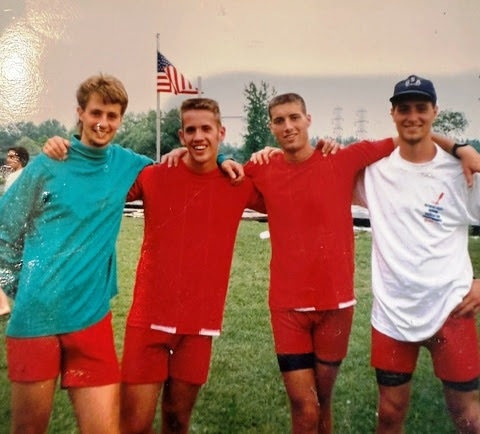
Editor’s Note: This piece was written by Kathy Newman with the partnership of her husband, Karl Newman, a member of Coach Jabo’s 1973 IRA National Championship varsity eight. As the 50th anniversary of that remarkable accomplishment approached, Karl found himself reflecting not only on the victory itself but also on the lifelong bonds formed among the men who shared that boat. The piece grew out of those reflections.
The piece was printed on beautiful parchment and presented to Coach Jabo as part of the First Annual Hall of Fame. A reading was also performed and recorded and will be available as part of the Hall of Fame video works we are creating. Our sincere thanks to Kathy and Karl for sharing these powerful reflections with our Wisconsin Rowing Stewards of 1874 Family.
Marcy Heim
SUPPORT WISO ROWING
Wisconsin Rowing’s strength has always come from its people—oars in the water, pulling as one. As we look to the future, your involvement is more important than ever. Whether through financial support or lending your time and talent, there are meaningful ways for every alum to contribute to the continued success of the program.