Once We Moved as One: A Tribute to Wisconsin Rowing Brotherhood
Rowers Lament author responds!
How Once We Were One Came to Be
Marcy’s Note: Many, many of you reached out about Kathy’s poem a few weeks back and asked if they might get in touch with her. I connected with Kathy and asked her to share the most common questions she received. Following is her wonderful response!. AND, she is also open to hearing from you. For those of you who might I missed the original lament printing, it is repeated below. Kathy is the wife of Karl Newman – a member of the 1973 Freshman crew who rowed varsity in 1974 and 1976. The original poem follows Kathy’s update.
A Lament
Kathryn A. Newman
Since Once We Were One appeared in the Stewards of 1874 newsletter, I’ve been asked two questions more than any others.
The first is, “How did you come to write it?”
The second is, “How could someone who never rowed competitively write a lament that seems to speak so personally to rowers?”
The answer to the first question is that I never intended to write a rowing lament.
After completing my father’s family history, I turned my attention to my mother’s Cameron family, whose roots lie in the Lochaber district of the western Highlands of Scotland. While researching the historic parish of Kilmallie, I encountered the work of the Reverend Archibald Clerk, whose collection of Gaelic Ossianic poems and laments has preserved an important literary tradition.
At about the same time, I was exploring the capabilities of ChatGPT as a research tool. Curious to see how it handled nineteenth-century Scottish Gaelic, I uploaded a screenshot of one poem—Duan IV—and asked for an English translation. I simply wanted to understand what it said.
The translation stopped me in my tracks.
Rather than celebrating youthful victories, the poem gave voice to an aging warrior remembering companions, shared hardships, and a world that had quietly slipped into memory. It was not a poem about battle as much as it was about friendship, loyalty, purpose, and the loneliness of being one of those left to remember.
I found myself asking a simple question:
What would an Ossianic lament sound like if it were written for a rowing crew?
That question became Once We Were One.
The second question—how a non-varsity rower could write a poem that resonated so deeply with rowers—is perhaps easier to answer.
The answer is that rowing has been part of my life for much longer than I realized.
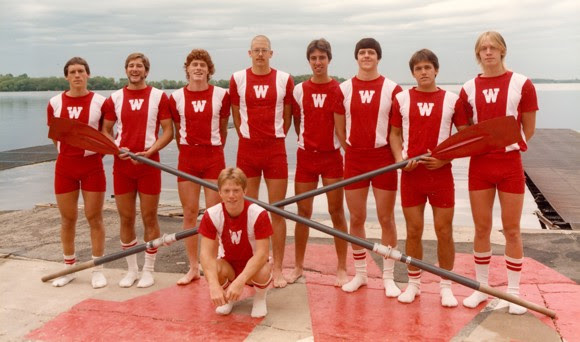
While I never rowed competitively for Wisconsin, rowing has woven itself through much of my life. A close friend from high school rowed for Wisconsin. My college roommate dated—and later married—a Wisconsin rower. That same roommate introduced me to the man I would eventually marry, Karl Newman, who rowed under Coach Jabo. During my own years at Wisconsin, I even spent a brief time in a shell before life’s currents carried me in another direction.
Over the past fifty years I have attended regattas, celebrated victories, listened to countless stories, and watched generations of Wisconsin rowers remain connected by friendships forged on the water. Through Karl and his teammates, I came to understand that rowing is far more than a sport. It is an experience that shapes identity long after the last race has been rowed.
My professional life as an occupational therapist deepened that understanding. Occupational therapists study the activities that give people’s lives meaning. We see how meaningful occupations shape identity, forge relationships, and become part of a person’s life story. The more I listened to rowers, the more I realized that rowing was one of those defining experiences.
When I encountered the ancient Ossianic laments, I wasn’t captivated by battles or warriors. I was captivated by enduring friendship, shared purpose, and the awareness that although time passes and lives diverge, the bonds formed in youth remain.
The more I reflected on those themes, the more I realized they were not uniquely Scottish. They were not even uniquely ancient.
They were deeply human.
Once We Were One is not about rowing technique or winning races. It is about belonging to something larger than ourselves. It is about friendships forged through shared sacrifice and mutual trust. It is about discovering that some chapters of our lives never really end because they continue to shape who we become.
The response from the Wisconsin rowing community has been both humbling and deeply gratifying. If the poem has found a home among you, I believe it is because it speaks less about boats than about brotherhood.
Perhaps that is Coach Jabo’s greatest legacy—not the races his crews won, but the lifelong brotherhood they carried with them after they left the boathouse.
************
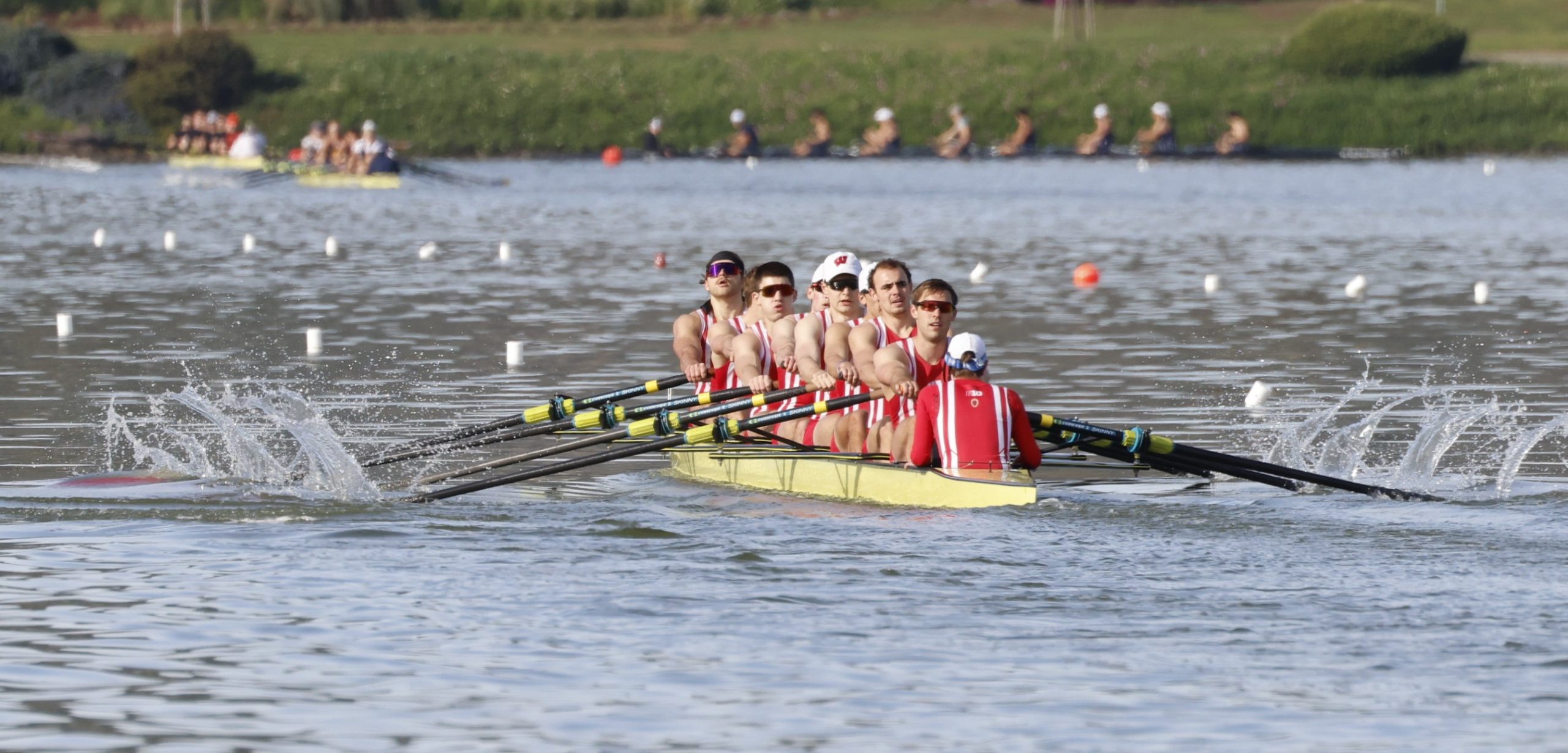
Once We Moved as One
Hear this, you who know the pull,
you who have tasted brotherhood on water—
I tell you what we were
before we were scattered.
Once we moved as one.
Not by word.
Not by command.
We faced backward.
Always backward.
The water went where it would.
We did not see it.
One voice saw for us,
one voice held the line.
It counted the breath of the water.
We trusted it.
We had no other choice.
We did not begin in harmony.
The boat was still.
The water held us.
The first strokes were short
And light.
Legs drove
before the rest would follow.
The water slow to yield.
We struck again.
And again.
The strokes lengthened.
The weight began to move.
What would not go
was forced to go.
Breath broke loose.
The boat answered.
Only then
could the rhythm begin.
One man held the time.
He did not hurry it.
He did not ease it.
His blade entered.
His blade left.
We matched what we could see.
What we could not see
came right
because he was steady.
He did not pull for himself.
He pulled
so the rest of us
would arrive together.
The man before me moved.
I moved, as did we all.
There was no following.
Only the beginning
passing through us.
Once the blade entered clean.
Once the blade left clean.
Eight marks lay on the water—
I remember them
as they did not last.
I could not name my strength.
I only knew the weight of the pull
when it passed through me
unchanged.
My legs knew the order.
They drove without asking.
My back followed.
My arms finished
what had begun
before thought
could claim it.
The body remembered
what the mind could not hold.
Breath found breath.
Knees rose together.
Eight men breathed one breath
because there was only one rhythm
and it did not belong
to any of us.
A mistake nearly came.
A blade caught wrong.
Hands answered
before fear arrived.
The water forgave us
because we were together still.
I did not look aside.
There was nothing there.
Only the blade ahead of me,
bright at the edge of sight,
rising and vanishing,
told me my time.
What I pulled alone was nothing.
What we pulled together
carried us forward.
There was a moment—
I cannot name it—
when the timing held,
and nothing checked
and the boat ran on
between the strokes.
We were still working.
The work no longer felt.
Each catch met water together.
Each finish left together.
What we gave returned to us
as flight.
That moment does not come
on command.
It is not taught.
It is found,
or it is not.
When it ended,
we did not speak.
No one said: I made it.
No one said: I kept it.
We sat and burned for breath
while the water kept our passing—
a line of small whirlpools,
each turning,
each fading.
Now the water moves without us.
The boat lies at rest.
The bodies are scattered.
The oars lie still.
No voice calls the count.
I remember the rhythm.
I cannot make it return.
Once we moved as one.
This I know
as I have never
felt it again.
SUPPORT WISCO ROWING
Wisconsin Rowing’s strength has always come from its people—oars in the water, pulling as one. As we look to the future, your involvement is more important than ever. Whether through financial support or lending your time and talent, there are meaningful ways for every alum to contribute to the continued success of the program.